
During my PhD, many fellow students shared the same question: Do scientists have freedom outside academia? Hopefully, this post can inspire someone.
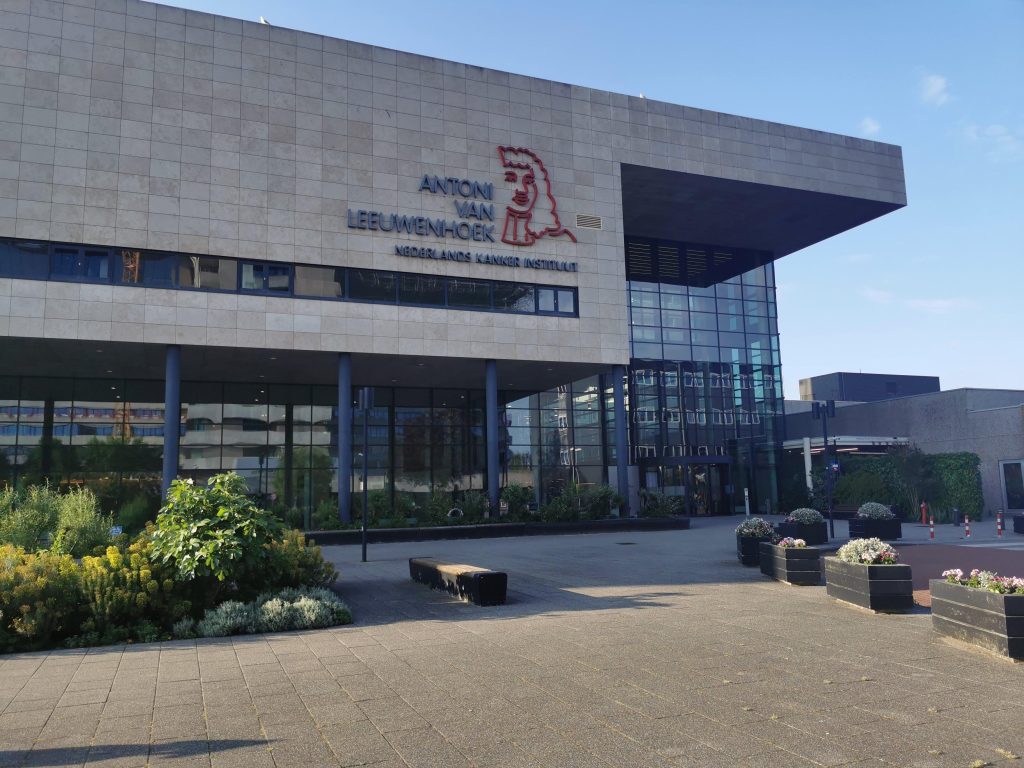
I recently returned to where it all started: the Netherlands Cancer Institute (NKI-AvL), where I did my PhD. About six years after elegantly shooting my very last pipette tip into the waste beaker, I walked into the building through the main revolving doors wearing a collared shirt. This time, I announced my arrival at the front desk. This time, I was an outsider.
I presented at the NKI Alumni Event, where former PhD students present their career paths outside academic research. I wanted to challenge the attending students, particularly those convinced that academia offers the highest degree of freedom.
Of course, I didn’t prepare this challenge out of arrogance or dismissal towards PhD students or academic researchers. On the contrary, it was a challenge that eventually relieved me from my persistent dilemma once I’d decided to leave the academic fortress less than 10 years ago.
Many non-academics—and academics—may not appreciate how insular the academic walls can be. If we personify academia, we may say it doesn’t tolerate departures from an environment that most probably won’t contain them anyway. The brutal reality is that only a fraction of academic researchers become group leaders or professors (interesting reads here and here).
Alumni events to peek out from the academic walls
Fortunately, my former institute eventually decided to deal with these unrealistic expectations of its employees, at least in theory. About 10 years ago, NKI started offering its employees the chance to learn about former employees’ success stories. I’d attend those career events.
Many in the audience, which mainly consisted of PhD students, seemed to have one question in common: “Did the presenters experience the same type of freedom outside academia as we did at the NKI?”
It later became clear that our feelings of freedom are relative and often deceiving.
I had mixed feelings about my PhD experience as anyone going through the same could attest. On the one hand, I loved our sense of academic freedom. We could initiate new projects from scratch and work independently. We could start internal and external collaborations and discuss science and other interesting stuff with brilliant people.
Because of this freedom, I wanted to follow the academic path and become a group leader. I long chased the same academic dream many – maybe even most – academics have in mind when we start.
However, sometimes, we fail to acknowledge the blind spot right in front of us. The academic path is exceptionally linear and rigid. It looks something like this: your PhD leads to a postdoc, which may take you through a second postdoc. We then become junior group leaders and, finally, an established group leader (some also aspire to become a professor). This was the path I had in mind at first.
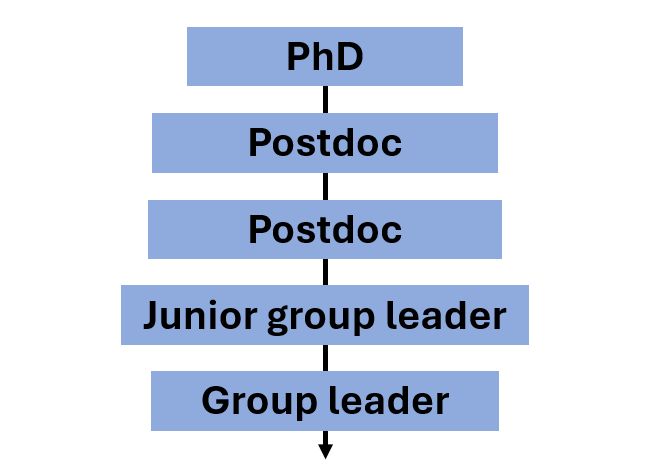
And that’s when my freedom expired. Once I’d realized—for one or another reason—that I didn’t want to become a group leader any longer, the academic path pointed me toward the Exit sign.
Freedom outside academia
After going through almost every option in the catalog of science-unrelated career choices – a catalog many PhD students seem to scroll through during their last years – I finally felt the pulling force of science communication. Actually, it was something I eventually stumbled upon. At a large career event, I’d spent most of my time discussing writing with representatives from the publishing industry. I’d also been running this blog for a few months and enjoyed the writing.
Why couldn’t I write about science professionally? In the spirit of being a researcher, I spent months studying science communication, a field with scattered and sometimes contradicting information.
I eventually became a science communicator. A path that exposed me to science journalism, which, in turn, offered me the opportunity to work as an in-house scientific content writer for the marketing team of a biophysics company. Later, I slightly changed my path and became a senior medical writer for the European Medicines Agency (EMA). I experienced this mid-pandemic, which allowed me to follow the relevant discussions from backstage and communicate with the public. Exciting times.
But I digress. Today, I freelance as a science communicator and help scientists, science communicators, non-scientists, and companies launch purposeful projects and improve communication and storytelling. It’s quite a mouthful for a description, but it depicts the diversity associated with my current work and previous experiences as a communicator.
So yes, by choosing science communication, I sacrificed pipetting and discovering new molecular pathways and mechanisms. Still, the choice to step out of academia also offered me a freedom that I think the linear structure of academic research couldn’t provide. Science communication allowed me to adapt and tailor my career path to my interests and needs. And I don’t even think I’ve yet discovered most of what this path could offer me. Let alone any other career choices unrelated to science communication.
Freedom inside academia, to a certain extent
Again, this is by no means an attempt to dismiss academic research. I highly value its academic freedom and critical mindset. Whoever completes a PhD has mastered skills beyond their specific PhD topic. We become experts at solving problems, starting new projects, learning new stuff from zero, digesting complex information, and analyzing information critically.
However, once it’s time to change direction, a reality most academics will experience eventually, the options shy away, and all the freedom expires. Freedom has its limitations. I guess that’s what I meant when I told these enthusiastic PhD students that feelings of freedom are relative and often deceiving. Sure, call me the Grinch, but I wanted to help them and expand their options beyond the fortress walls.
To academics and non-academics, do you have similar or different thoughts about freedom outside of academia or inside? Let us know in the comments.
Thanks to the NKI Alumni Event organizers and audience for a great event. I wish you all the best in choosing your next career steps.


